
Heart Rate Variability (HRV) describes the small changes in time between consecutive heartbeats. It is not the same as resting heart rate. Wearable monitors estimate HRV from signals collected at the wrist, finger, or chest, but their sensors and algorithms can produce different results. That matters when a morning reading appears unusually low after a poor night’s sleep or a hard training session.
Interest in these devices reflects a wider shift toward personal fitness tracking. The American College of Sports Medicine’s 2024 Worldwide Survey of Fitness Trends ranked wearable technology first for the eighth consecutive year. Still, popularity is not proof that every device is accurate or suitable for every user. HRV can vary with sleep, illness, stress, alcohol, medication, and measurement timing. Look for clear testing information, consistent recording methods, practical battery life, and an app that explains trends without overstating what they mean. Small details count.
This guide compares 10 HRV monitors for buyers, including wearability, data access, and everyday ease of use. It also considers how each product presents its readings, since a number without context can mislead. HRV is useful for observing patterns, not diagnosing a condition. No wearable replaces medical advice. The best choice is the one you can wear consistently and interpret cautiously.
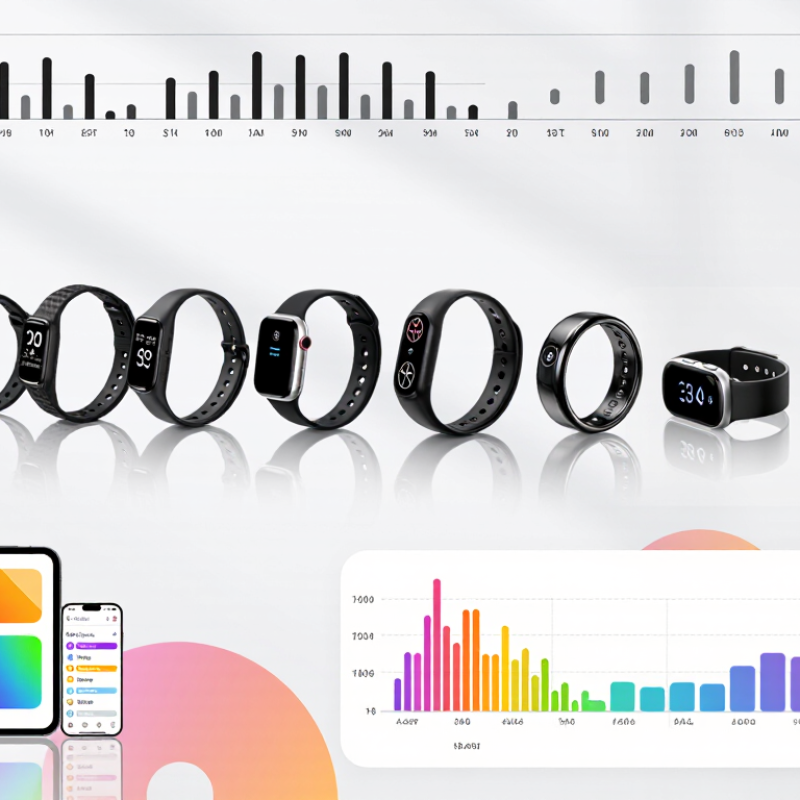
Heart rate variability (HRV) describes changes in the time between successive normal heartbeats. It is not the same as heart rate, which counts beats per minute. Many monitors report RMSSD, a measure of short-term beat-to-beat variation, or SDNN, which reflects variation across a recording. The 1996 standards from the European Society of Cardiology and North American Society of Pacing and Electrophysiology distinguish five-minute short-term recordings from 24-hour analyses. Recording length matters. A value from a quiet morning reading cannot be compared casually with a full-day result.
Some devices also estimate frequency-domain measures, including low- and high-frequency power. In a 2017 review, Shaffer and Ginsberg describe how recording conditions and metric choice shape HRV interpretation. They caution against treating the LF/HF ratio as a simple measure of stress or autonomic balance. Many wrist monitors use optical sensors to detect pulse timing, so movement, a loose strap, or cold hands can muddy readings. Small details matter. I still find a single score tempting, but it can hide uneven sleep, recent exercise, or a poor sensor fit. Look for repeated readings taken under similar resting conditions, not one dramatic morning number.
When comparing HRV monitors, look beyond the daily score. Check whether the device uses optical pulse sensing or an ECG-based signal, and whether it records overnight, during rest, or continuously. These methods do not measure the same signal in exactly the same way. A 2013 review by Schäfer and Vagedes found that pulse-rate variability can differ from ECG-derived HRV, especially when movement interferes with readings. Fit matters. A loose wrist strap can add noise; a comfortable sensor you wear consistently may be more useful than a feature-heavy device you leave in a drawer.
Ask which HRV metric the app reports, such as RMSSD, and whether it explains how readings are collected. The 1996 ESC/NASPE Task Force standards describe five-minute recordings as a short-term HRV measure and 24-hour recordings for longer-term analysis. That distinction matters: a brief morning reading should not be treated as equivalent to a full-day record. Check whether the monitor supports repeatable measurements under similar conditions, such as after waking and before coffee. Small details matter.
Also compare battery life, comfort during sleep, data export, and how clearly the app flags missing or irregular readings. Look for published validation against ECG, not only claims of “high accuracy.” A polished chart can still disguise inconsistent data, and no consumer score diagnoses a health condition. I would value transparent measurement notes over a confident-looking number; that preference is practical, though not very glamorous.
Choosing an HRV monitor starts with when and how you plan to use it. A chest strap can record beat-to-beat intervals during exercise, while a wrist or finger device may suit overnight tracking better. Neither is automatically best. Comfort matters; a monitor left in a drawer cannot reveal useful patterns. Picture an ordinary morning: will you wear it to bed, or sit quietly for a few minutes before coffee? Small details decide.
Check how the device measures HRV and when it takes readings. Optical sensors can be affected by movement, so a quiet, consistent reading may be easier to compare over time. See whether the app explains its metric, such as RMSSD, in plain language. Trends matter more. One low reading after poor sleep or a hard workout does not establish a health problem. Your routine, stress, and even measurement timing can shift results.
Also consider battery life, comfort during sleep, phone compatibility, and whether you can export your data. Read the privacy settings before sharing sensitive health information. Not every dashboard is clear, and more charts do not always mean better guidance. HRV monitors can support personal tracking, but they cannot diagnose a condition. If readings concern you or symptoms persist, discuss them with a qualified health professional.
I would not chase a perfect score; consistency is useful, but the number is still only one piece of the picture.
Choosing among the 10 best heart rate variability monitors starts with how you plan to use the data. A chest strap can capture pulse changes during workouts, while a wrist device or ring may be easier to wear overnight. Some monitors also track sleep, resting heart rate, and breathing patterns. More features are not always more useful.
Check how each monitor measures HRV and when it records readings. Optical sensors can be convenient, but fit and movement may affect results. ECG-based sensors often provide a different measurement approach, yet comfort matters if you want regular readings. Look for clear trend graphs, export options, and battery life that suits your routine. Small details count.
A useful monitor should show consistent trends, not just a dramatic score each morning. Readings can shift with illness, stress, alcohol, poor sleep, or a hard training session. One number cannot explain the whole picture. Compare readings taken under similar conditions, and treat sudden changes as a prompt to reflect rather than a diagnosis. To be honest, even a good device can make normal variation feel worrying. HRV monitors are wellness tools, not substitutes for medical advice.
Compare common HRV recording windows when evaluating a monitor. Standard short-term HRV analysis commonly uses a 5-minute recording, while long-term analysis commonly uses a 24-hour recording. These are measurement protocols, not product rankings.
Recording duration alone does not determine accuracy. Check whether a monitor captures beat-to-beat intervals reliably and supports the recording protocol needed for your use.
Accuracy depends on more than the sensor. For useful comparisons, measure at the same time each day, ideally before coffee or exercise. A chest strap can capture beat-to-beat intervals closely, but only when fitted snugly and paired with software that reports HRV. Optical wrist and arm sensors are easier to wear overnight; motion, loose contact, and cold skin can distort readings. Small differences may be noise.
Comfort is personal. A strap may feel secure during a short morning check, then become irritating overnight. Wrist devices often disappear under a sleeve, while a ring avoids a tight band but may feel awkward during lifting. Try the fit for several nights. Value also depends on what you will use: a simple monitor with reliable trend tracking may be more useful than an expensive model crowded with features. Check battery life, data access, and whether measurements are explained clearly. I would not rank a device by one impressive reading; consistency matters more, and even careful measurements can vary after poor sleep, illness, or a hard workout.