
Why Choose a Galvanized Steel Plate Supplier?
Choosing a Galvanized Steel Plate Supplier is not simply a purchasing decision. It affects durability, fabrication efficiency, maintenance costs, and project reliability. A dependable supplier provides more than steel plates. It offers verified zinc coatings, consistent dimensions, traceable test reports, and practical technical guidance.
John E. Townsend, a former technical director at the American Galvanizers Association, explained, “Zinc provides both barrier protection and cathodic protection.” This principle matters on construction sites, where plates may face rain, salt air, abrasion, or frequent handling. A properly galvanized surface can protect exposed steel even when minor scratches occur. That detail is easy to overlook.
Quality must be visible.
An experienced Galvanized Steel Plate Supplier should explain coating thickness, steel grade, plate flatness, edge condition, and inspection procedures. Ask for mill certificates and coating measurements. Check how plates are packaged before delivery. Wet packaging, trapped moisture, and rough stacking can create avoidable storage problems, even when galvanizing quality is strong.
However, galvanized steel is not automatically the best choice for every application. High-temperature service, severe chemical exposure, or strict welding requirements may demand another specification. Supplier advice should be specific, not promotional. I would also question unusually low prices. They may reflect thinner coatings, uncertain origin, or limited inspection.
The right supplier combines dependable material with honest limitations. That balance supports safer decisions, longer service life, and fewer surprises after installation. A careful buyer does not accept impressive claims alone. They verify the details.
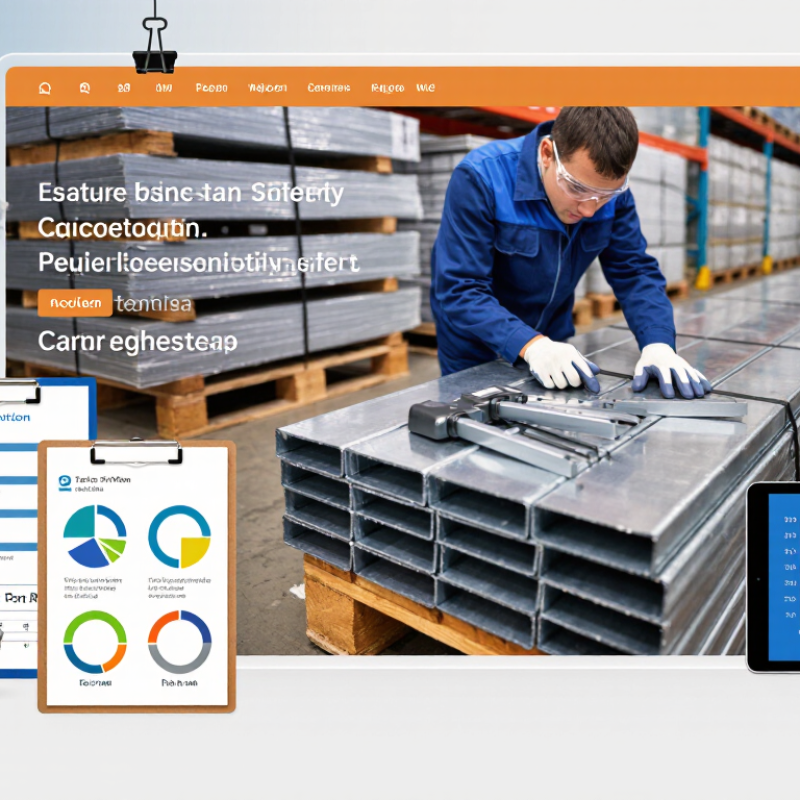
What Is a Galvanized Steel Plate Supplier?
A galvanized steel plate supplier is a company that provides steel plates coated with zinc for improved corrosion resistance. It may manufacture the plates, purchase them from approved mills, or distribute them to construction and industrial customers. The supplier manages specifications such as steel grade, plate thickness, dimensions, surface condition, and zinc coating weight.
Experienced suppliers do more than process orders. They help customers match plate properties with outdoor structures, storage tanks, equipment frames, or fabricated components. They can also arrange cutting, packing, inspection, and scheduled delivery. That work is practical. A minor error in thickness or coating can create fitting problems during fabrication. Reliable suppliers therefore confirm drawings, quantities, tolerances, and delivery conditions before production begins.
Quality evidence should be easy to review. A supplier should provide mill test certificates, coating details, inspection records, and traceability information when required. Samples may reveal uneven coating, rough edges, or handling marks that documents cannot show. Small checks prevent costly surprises. Even experienced teams can overlook packaging damage or incorrect labeling. A responsible supplier admits such risks and corrects them quickly. Buyers should ask how the supplier handles rejected plates, delayed shipments, and changes in project requirements. Clear answers are more useful than confident promises.
Why Choose a Galvanized Steel Plate Supplier? - What Is a Galvanized Steel Plate Supplier?
| Evaluation Dimension | Verified Technical Information | Why It Matters | What to Confirm with the Supplier |
|---|---|---|---|
| Supplier definition | A galvanized steel plate supplier provides steel substrate coated with zinc, usually through a continuous hot-dip galvanizing process or batch hot-dip galvanizing process. | The zinc layer provides barrier protection and sacrificial protection against atmospheric corrosion. | Ask whether the material is continuously galvanized sheet, batch-galvanized plate, or another coated product. |
| Common product forms | Products may be supplied as coils, cut-to-length sheets, flat plates, or fabricated components, depending on the production route. | The correct form can reduce cutting, handling, and material waste. | Confirm maximum width, length, thickness, coil weight, flatness, and cut-to-length capability. |
| Typical steel thickness | Continuously galvanized steel is commonly available in thin-gauge sheet and plate products; the exact range depends on the galvanizing line and applicable specification. | Thickness affects structural capacity, formability, weight, and fabrication cost. | Request the nominal thickness, permitted thickness tolerance, and dimensional inspection method. |
| Zinc coating mass | Common coating designations include Z100, Z180, and Z275. The number generally represents the total nominal zinc coating mass on both sides in grams per square metre under the relevant specification. | A higher coating mass generally provides more zinc for corrosion protection, although service conditions and design details also affect service life. | Confirm whether the stated value is total both-sides coating mass or a single-surface value, and request the inspection standard. |
| Applicable standards | Common specifications include ASTM A653/A653M for zinc-coated steel sheet and EN 10346 for continuously hot-dip coated flat steel products. Requirements vary by grade and coating designation. | A recognized standard establishes requirements for chemical composition, mechanical properties, coating, dimensions, and testing. | Specify the required standard, edition, steel grade, coating class, surface quality, and delivery condition. |
| Steel grade and mechanical properties | Galvanized products can be made from commercial-quality, drawing-quality, structural, or higher-strength steel grades. Yield strength, tensile strength, and elongation depend on the selected grade. | The grade determines whether the material is suitable for bending, deep drawing, roll forming, or load-bearing applications. | Obtain the mill test certificate and compare its chemical and mechanical values with the purchase specification. |
| Surface finish | Available surface conditions may include regular spangle, minimized spangle, or smooth finishes, depending on the galvanizing process and customer requirements. | Surface appearance can affect painting, forming, welding, and the visual quality of finished parts. | Confirm surface-quality class, allowable imperfections, passivation or oiling, and whether the surface is intended for painting. |
| Corrosion protection | Zinc protects steel by forming a physical barrier and by preferentially corroding when exposed steel is connected to the zinc coating. | This can extend the service life of steel components in many atmospheric environments. | Describe the environment, humidity, salt exposure, temperature, chemical contact, and expected service life before selecting the coating. |
| Fabrication compatibility | Galvanized steel can generally be cut, bent, punched, and formed using suitable procedures. Fabrication may damage the coating at cut edges or highly deformed areas. | Matching the steel grade and coating to the fabrication process helps reduce cracking, powdering, and rework. | Confirm minimum inside bend radius, forming direction, edge-treatment requirements, and repair procedures for damaged zinc. |
| Welding considerations | Welding galvanized steel can generate zinc-containing fumes, and the coating near the weld may require removal and post-weld repair. | Proper ventilation, personal protection, welding parameters, and coating repair are necessary for safety and corrosion performance. | Confirm the intended welding process, fume-control requirements, weld-zone coating repair method, and applicable safety procedures. |
| Quality documentation | Typical documents include a certificate of conformity, mill test certificate, dimensional inspection report, coating-mass result, and packing list. | Traceable documentation helps verify that delivered material matches the order and project requirements. | Require heat number, batch or coil identification, standard designation, test results, and document retention period. |
| Packaging and transport | Galvanized steel should be protected from scratching, standing water, condensation, and prolonged contact with corrosive materials during storage and transport. | Poor storage or transport conditions can cause white rust and staining on the zinc surface. | Confirm wrapping, edge protection, pallet or skid design, ventilation, marking, and storage instructions. |
| Supplier selection benefit | A capable supplier can coordinate grade selection, coating requirements, cutting, inspection, documentation, packaging, and delivery. | A single qualified source can simplify procurement and improve consistency between material batches. | Evaluate technical support, production capability, inspection controls, lead time, minimum order quantity, and after-sales response. |