China Top Auto Glass Direct Manufacturers for Global Buyers?

As global vehicle production expands, buyers are examining China’s leading auto glass manufacturers more carefully. Price still matters, but it cannot replace dependable quality. For many importers, the auto glass direct model offers clearer communication, factory pricing, and closer control over specifications. It may also reduce unnecessary trading layers. However, direct purchasing requires patience, technical knowledge, and disciplined supplier checks.

Experienced buyers usually examine more than a polished website. They review production capacity, glass standards, mold accuracy, packaging methods, and delivery records. A reliable manufacturer should explain windshield curvature, thickness, acoustic layers, heating functions, and sensor compatibility in clear terms. Factory visits, sample testing, and documented quality procedures can reveal details that brochures often hide. Fit matters. A poorly matched windshield can create installation delays and customer complaints.

This guide introduces important factors for comparing China’s top auto glass direct manufacturers for global buyers. It focuses on manufacturing experience, product consistency, export support, customization, and after-sales communication. Certifications and test reports deserve verification, not blind trust. No supplier is perfect. Even an experienced factory may face tooling delays or an occasional quality issue. The real question is how openly the company responds, corrects defects, and prevents repetition. Buyers should also consider destination requirements, packaging risks, replacement policies, and long-term supply stability. A lower quotation may look attractive, yet hidden inspection or breakage costs can change the final result. Careful comparison creates a more practical purchasing decision.

China Top Auto Glass Direct Manufacturers for Global Buyers?

China’s Auto Glass Manufacturing Industry and Global Market Role

China’s auto glass industry has become a major part of the global vehicle supply chain. The China Association of Automobile Manufacturers reported 31.28 million vehicle units produced in 2024. That scale creates strong demand for windshields, side windows, roof glass, and replacement parts. OICA recorded about 92 million motor vehicles produced worldwide in 2024, showing China’s significant manufacturing role.

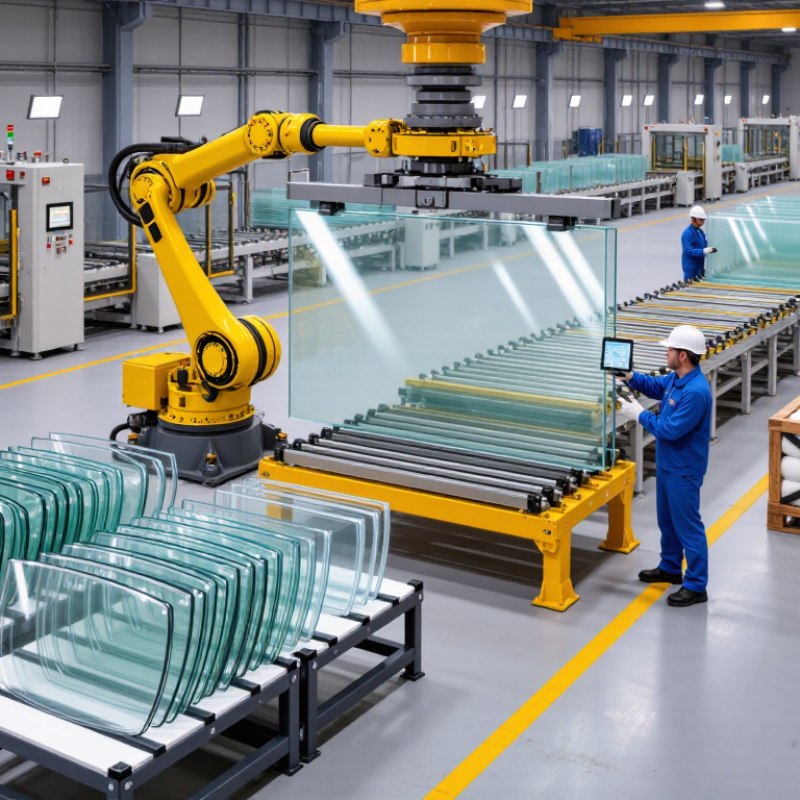
The industry is also moving beyond basic glass processing. Modern factories combine float glass cutting, bending, tempering, lamination, and strict optical inspection. Windshields increasingly support cameras, sensors, heating elements, and acoustic control. These functions require accurate thickness, curvature, light transmission, and edge quality. Global buyers should check traceable batch records and testing results, not only price. They should also confirm compatibility with vehicle repair procedures and sensor calibration.

Export statistics require careful reading. UN Comtrade data groups automotive safety glass under broader HS categories, so the figures may include several vehicle-glass types. The data still shows China as an important international supplier. However, supply scale does not guarantee equal quality from every factory.

That is the uncomfortable part.

Production consistency can vary between batches, especially when specifications are copied too loosely. A serious manufacturer should provide inspection records, impact testing, laminated-glass performance data, and clear packaging controls. Some factories communicate well but document poorly. That weakness deserves attention.

How to Identify Leading Direct Auto Glass Manufacturers in China

How to Identify Leading Direct Auto Glass Manufacturers in China

Identifying a direct auto glass manufacturer requires more than checking a polished website. Ask for the factory address, production photos, and a live video tour. A genuine manufacturer should explain its glass cutting, edge grinding, bending, laminating, and inspection processes clearly. Watch for specific details, such as furnace temperature records, interlayer storage, and barcode-based batch tracking.

Request samples from the same production line used for regular orders. Check fit, edge quality, optical clarity, curvature, and sensor openings against approved drawings. Reliable suppliers can provide material specifications, test reports, inspection records, and traceability documents. They should also discuss tooling ownership, minimum order quantities, packaging strength, and replacement procedures without avoiding difficult questions.

A useful factory audit includes conversations with quality engineers, not only sales staff. Review calibration records and observe how workers handle glass before packing. Do not rely on one successful sample. Production can change.

No audit is perfect.

Buyers should compare several batches and record dimensional results. Some suppliers may present strong documentation but weak process control. Others may communicate poorly while producing consistent glass. This is where practical verification matters. A direct relationship with the production team improves feedback, but assumptions still require checking. Even experienced buyers can overlook small issues, especially during urgent purchasing cycles.

How to Identify Leading Direct Auto Glass Manufacturers in China

This buyer-side reference framework highlights the main dimensions global buyers should verify before selecting a direct auto glass manufacturer. The percentages represent recommended evaluation priorities rather than company or brand market-share data.

Key evidence includes applicable safety certification, batch traceability, dimensional accuracy, production consistency, export documentation, protective packaging, and responsive technical support.

Key Products, Certifications, and Manufacturing Capabilities

China’s direct auto glass manufacturers supply windshields, door glass, quarter glass, and rear windows for global buyers. Common options include laminated acoustic glass, tempered safety glass, solar-control glass, and products prepared for head-up displays. Some factories also produce windshields with camera brackets, heating wires, rain sensors, or antenna systems.

Manufacturing capability matters more than a product list. Experienced plants usually manage glass cutting, edge grinding, ceramic printing, bending, lamination, autoclave processing, and final inspection in one workflow. This reduces transfer damage and improves batch consistency. Automated vision systems can identify chips, bubbles, distortion, and print defects. Human inspection remains useful. Machines still miss unusual flaws.

Reliable suppliers should provide traceable quality records. ISO 9001 supports controlled quality systems, while IATF 16949 indicates automotive-focused process management. Depending on the destination market, buyers may request compliance with ECE R43, FMVSS 205, or other applicable safety requirements. Certification scope must match the exact glass type and production site. A certificate alone proves little.

Ask for sample reports, material specifications, curvature data, optical distortion results, and packing photographs. Confirm whether testing is performed internally or by an independent laboratory. Production capacity should include mold development, minimum order quantities, replacement support, and delivery planning. One weakness deserves attention: some manufacturers describe “custom capability” broadly, but cannot reproduce complex curves consistently. A pilot order can reveal this before larger commitments.

China Top Auto Glass Direct Manufacturers for Global Buyers — Key Products, Certifications, and Manufacturing Capabilities

A practical buyer-reference table covering commonly available automotive glass products, technical specifications, compliance standards, and factory capabilities.

Category Buyer-Relevant Dimension Common Industry Data or Standard Typical Direct-Manufacturer Capability
Product Range Laminated windshields Two glass plies bonded with a polymer interlayer. A common construction is approximately 2.1–2.5 mm glass + 0.76 mm PVB + 2.1–2.5 mm glass. CNC cutting, edge grinding, bending, ceramic-frit printing, autoclave lamination, and inspection for optical distortion and bubbles.
Product Range Laminated side or rear glass Used where improved acoustic performance, security, solar control, or passenger protection is required. Acoustic PVB is commonly supplied in approximately 0.76–1.52 mm interlayer thicknesses. Production of curved laminated parts with tinted, acoustic, solar-control, heated, antenna, and privacy configurations, subject to vehicle design requirements.
Product Range Tempered side and back glass Heat-treated safety glass designed to break into relatively small granules rather than large sharp shards. Typical automotive thicknesses are approximately 3.0–5.0 mm. Horizontal or vertical tempering, rapid quenching, ceramic printing, hole drilling, notching, edge finishing, and dimensional inspection.
Product Range Panoramic roof and sunroof glass Usually tempered or laminated glass with solar-control treatment, dark tint, ceramic border, and optional low-emissivity or infrared-reducing coating. Large-format bending and tempering, coating integration, frit printing, encapsulation, bonding preparation, and assembly with moving or fixed roof systems.
Product Range Heated windshield and glass with antennas May include embedded heating wires, conductive coatings, AM/FM antennas, GPS elements, or communication antennas. Electrical resistance and signal performance must be matched to the vehicle system. Busbar printing, conductive-element integration, electrical continuity testing, antenna pattern control, and connector or cable installation.
Product Range ADAS-compatible windshield Designed for cameras, rain-light sensors, head-up displays, and driver-assistance systems. Optical quality, mounting position, wedge angle, and camera-area clarity are critical. Sensor brackets, camera windows, calibration targets, optical inspection, wedge-control management, and vehicle-specific positioning documentation.
Materials Glass substrate Automotive safety glass generally uses clear, tinted, heat-strengthened, or fully tempered soda-lime silicate glass with controlled thickness and optical quality. Automated cutting, shape nesting, edge processing, drilling, washing, surface inspection, and traceability by production batch.
Materials Interlayer materials PVB is widely used for windshields and laminated automotive glass. Acoustic, solar-control, colored, and high-performance interlayers are available for specialized applications. Clean-room or controlled-area lay-up, interlayer cutting, humidity control, pre-pressing, autoclave bonding, and adhesion or delamination inspection.
Functional Features Solar-control and privacy glass Tinted glass, reflective coatings, infrared-reducing coatings, and dark privacy glass can reduce solar heat gain and glare. Visible light transmission depends on the selected specification. Tint matching, coating processing or sourcing, spectrophotometer testing, color consistency control, and sample approval before mass production.
Functional Features Ceramic frit and black border A ceramic frit masks adhesive lines, improves appearance, and helps protect bonding areas from ultraviolet exposure. Frit coverage and location are vehicle-specific. Screen or digital ceramic printing, controlled firing, edge-definition inspection, logo-free private-label production, and repeatable color management.
Manufacturing Forming and bending Windshields and curved body glass require controlled heating and forming to achieve the specified curvature, thickness distribution, and optical performance. Gravity bending, press bending, matched-mold forming, automated temperature control, dedicated tooling, and dimensional measurement using templates or optical systems.
Manufacturing Lamination and autoclave processing Laminated glass requires controlled de-airing, pressure, temperature, and cycle time to achieve stable interlayer bonding without bubbles or delamination. Pre-press lines, vacuum systems, autoclaves, process-record retention, cycle monitoring, and batch-level quality traceability.
Manufacturing Encapsulation and component assembly Glass may be supplied with polyurethane encapsulation, molded plastic carriers, clips, brackets, heating terminals, sensors, or rubber profiles. Injection molding or polyurethane encapsulation, component positioning fixtures, adhesive preparation, torque control, and assembly inspection.
Quality Control Optical and visual inspection Typical checks include bubbles, inclusions, scratches, distortion, haze, roller wave, color, frit defects, edge chips, and dimensional conformity. Light-box inspection, distortion screens, haze meters, spectrophotometers, automated vision systems, coordinate measurement, and documented defect limits.
Quality Control Safety performance testing Testing may cover fragmentation, impact resistance, penetration, abrasion, environmental durability, thermal stability, and adhesion, depending on the destination market. In-house routine testing with access to accredited third-party laboratories for certification, homologation, sample testing, and periodic validation.
Certifications ECE R43 UN Regulation No. 43 defines approval requirements for safety glazing materials and their installation in vehicles for applicable markets. Manufacturers serving E-mark markets should provide valid approval documentation, marking details, product scope, and traceability records for the supplied glass.
Certifications FMVSS 205 and ANSI/SAE Z26.1 FMVSS 205 references glazing materials and incorporates performance requirements associated with applicable U.S. vehicle glazing specifications. Suppliers targeting North America should support compliant marking, test reports, material identification, and documentation for the exact product configuration.
Certifications GB 9656 GB 9656 is the Chinese national standard for safety glazing materials used in motor vehicles, covering relevant safety and performance requirements. China-market production can include testing and marking aligned with the applicable edition and product category of the standard.
Certifications CCC and market-specific approvals Certain automotive glass products sold in China may require China Compulsory Certification or other applicable conformity procedures. A qualified supplier should confirm whether certification applies to the product, provide certificate scope, and ensure that markings match the approved configuration.
Management Systems ISO 9001 ISO 9001 establishes requirements for a quality-management system, including documented processes, corrective actions, risk management, and continual improvement. Common evidence includes a current certificate, defined inspection plans, incoming-material control, nonconformance records, and production traceability.
Management Systems IATF 16949 IATF 16949 is an automotive quality-management standard focused on defect prevention, process consistency, customer-specific requirements, and supply-chain control. Automotive-oriented factories may provide APQP, PPAP, FMEA, control plans, measurement-system analysis, capability studies, and structured corrective-action reports.
Customization OEM, OES, and aftermarket tooling Glass geometry, curvature, apertures, brackets, frit patterns, sensor zones, and packaging requirements vary by vehicle platform and replacement application. CAD or drawing review, reverse engineering from approved samples, CNC tooling, prototype validation, sample approval, and controlled engineering changes.
Packaging Export packing and logistics Automotive glass requires separation, edge protection, moisture control, impact-resistant crates, and stable loading to reduce breakage during international transport. A-frame or rack packaging, export cartons or wooden cases, barcode traceability, container loading plans, moisture protection, and customized shipping marks without brand data.
Buyer Verification Documents to request before order Important documents include technical drawings, specification sheets, approval certificates, test reports, quality manual, inspection plan, warranty terms, and change-control procedures. Professional direct manufacturers should be able to provide product-specific documentation rather than only generic factory certificates or unrelated test reports.

Buyer note: Specifications, certification scope, markings, and test requirements must be confirmed for the exact glass part number and destination market. The figures shown are common industry ranges and should not replace approved engineering drawings or regulatory documentation.

OEM, Aftermarket, and Custom Supply Options for Global Buyers

Direct Auto Glass Supply for Global Buyers

Global buyers need more than a low quotation. They need stable fit, clear documentation, and responsive production support. Direct manufacturers can provide OEM supply with approved drawings, controlled materials, and repeatable inspection records. Fit comes first. Each batch should match the required vehicle application, glass dimensions, curvature, tint, and attachment points.

Aftermarket programs require broader coverage. A capable manufacturer can manage popular applications, replacement demand, and mixed-volume orders. Buyers should review sample approval methods, packaging strength, labeling accuracy, and breakage procedures before placing regular orders. Small details matter. A strong carton cannot correct incorrect glass identification.

Custom supply is useful for specialty vehicles, regional specifications, and revised designs. Manufacturers may support new tooling, logo-free packaging, edge treatment, sensor areas, and installation accessories, subject to technical review. Clear drawings reduce misunderstandings. However, every customization can affect tooling costs, minimum quantities, lead times, and quality checks.

Experienced buyers often request factory audits, material declarations, inspection plans, and shipment photos. They also compare communication speed during a sample project. That test is revealing. Some suppliers answer quickly but explain little. Others provide technical detail but miss delivery updates. No process is perfect, and production issues can occur. Reliable partners disclose risks early, record corrective actions, and improve future batches instead of hiding small failures. Before approval, buyers should verify product standards, import requirements, and installation compatibility in the destination market.

Order Process, Quality Control, Pricing, and Export Considerations

Buying auto glass directly from Chinese manufacturers requires more than comparing factory quotes.

Send exact vehicle details, glass drawings, dimensions, curvature data, and sensor openings. Ask whether the factory can produce the required tint, acoustic layer, heating wires, or camera bracket. A reliable order process includes a written specification, approved sample, purchase contract, and pre-shipment inspection. Confirm the minimum order quantity and production lead time before paying a deposit.

Quality control should cover every stage. Inspect raw glass for scratches and bubbles. Check cutting accuracy, edge finishing, lamination strength, optical distortion, and bracket alignment. Request batch photographs, test reports, and traceability records. Reports should match the destination market’s requirements, not merely show generic laboratory results. Small details matter. A missing label can delay installation or customs clearance. No factory is flawless; even strong suppliers need independent checks on higher-value shipments.

Pricing should separate glass cost, tooling, packaging, inland transport, and export charges.

Compare quotations under the same Incoterm, such as EXW, FOB, or CIF. A lower unit price may hide weaker cartons, higher breakage risk, or expensive replacement parts. Use reinforced corner protection, moisture control, and clear pallet markings for long-distance transport. Confirm the commercial invoice, packing list, certificate of origin, and shipping data before dispatch. Delays still happen, especially when product codes or consignee details are incomplete. A trial order often reveals problems that samples do not.