China Top Deck Door Manufacturers and Suppliers
Choosing among China’s top deck door manufacturers and suppliers requires more than comparing online prices. A reliable deck door must match the vessel, opening dimensions, operating environment, and classification requirements. This guide introduces manufacturers with attention to practical performance, not marketing claims. It considers watertight and weathertight designs, marine-grade steel or aluminum, hinge quality, gasket materials, locking systems, and surface protection. Small details matter. A poorly fitted gasket may leak during heavy spray. A weak coating may fail in salt air.
The evaluation also focuses on evidence that buyers can verify. Experienced suppliers should provide production drawings, material certificates, inspection records, and clear testing procedures. Relevant approvals may include certificates from recognized classification societies, when the project requires them. Factory experience is useful, but documented quality control is more dependable. Visitors should examine welding areas, door frames, drainage details, and packaging methods. Photographs help, although they cannot replace inspection.
No supplier is perfect. Even an established factory may misunderstand a custom opening or delivery condition. Buyers should confirm dimensions, pressure requirements, installation access, spare parts, and after-sales support in writing. Samples can reveal problems before bulk production begins. A low quotation may exclude testing, coating upgrades, or export packaging. That is worth questioning.
This overview aims to support informed sourcing decisions. It does not rank suppliers only by production scale. Instead, it connects technical capability, communication, compliance, and real project experience. The strongest partnership is usually built through precise drawings, honest feedback, and consistent inspection.
Deck Door Types: Watertight, Weathertight, Sliding, and Hinged Designs
China Top Deck Door Manufacturers and Suppliers
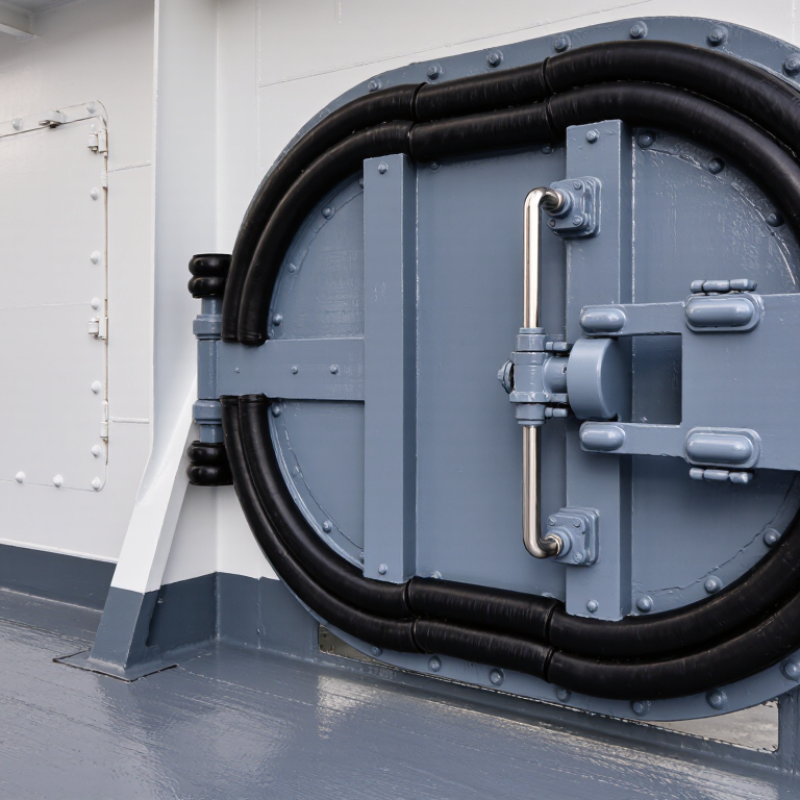
Deck doors protect cargo, machinery, and crew areas from changing sea conditions. Watertight doors resist hydrostatic pressure after flooding. Weathertight doors block rain, spray, and wind on exposed decks. Sliding designs save corridor space and support safer movement near machinery. Hinged doors provide simple access and faster installation. Each type needs a different sealing method, frame strength, and drainage arrangement.
UNCTAD’s Review of Maritime Transport 2024 reported approximately 12.3 billion tons of seaborne trade in 2023. This volume increases pressure on reliable access equipment. IACS requirements and class-survey practices also emphasize tightness, closing performance, and material traceability. Chinese manufacturers and suppliers should provide certified steel or marine-grade aluminum, tested gaskets, accurate drawings, and documented pressure results. A door can look strong yet fail because of poor alignment. That detail is easy to underestimate.
Tips: Match the door to its location, not only its size. Check opening direction, sill height, emergency access, and coating compatibility. Request factory inspection records and replacement-gasket details before ordering. Sliding doors need clean tracks. Hinged doors need strong hinges and controlled stops. Small details matter. A perfect catalog fit is rarely perfect onboard, so final measurements should be verified before production.
Marine Standards: SOLAS, IMO, IACS, and ISO 5488 Requirements
China Top Deck Door Manufacturers and Suppliers
Marine deck doors are safety-critical boundaries, not ordinary steel panels. SOLAS Chapter II-1 addresses watertight integrity, while Chapter II-2 governs fire protection. The IMO FTP Code also defines fire-test principles for approved marine constructions. In practice, Chinese manufacturers and suppliers should match each door to its location, pressure exposure, fire rating, and escape function. A door on an exposed deck needs more than a strong frame. It needs dependable seals, compression dogs, drainage details, and traceable testing records. Small gaps become serious at sea.
IACS rules add classification discipline through approved drawings, material control, inspection, and testing. IACS reports that its member societies cover more than 90% of the world’s cargo-carrying tonnage, making class documentation commercially important. ISO 5488 provides a useful reference for steel door dimensions and construction, but it should not replace project-specific SOLAS or class requirements.
Buyers should request weld procedures, material certificates, hinge calculations, gasket specifications, and hydrostatic or hose-test evidence. A polished certificate alone is not enough.
The Allianz Safety and Shipping Review 2024 recorded 26 large-ship total losses in 2023, despite a long-term decline. Every boundary still matters. Factory experience shows that alignment errors often appear during installation, not fabrication. Suppliers should therefore support onboard adjustment and inspection. This is where procurement can be imperfect: the lowest quotation may omit testing, documentation, or corrosion allowances. A better comparison measures lifecycle reliability, not only door weight or purchase price.
Technical Metrics: 0.1 MPa Pressure Tests, IP Ratings, and Steel Thickness
China’s top deck door manufacturers and suppliers should publish measurable test evidence, not only catalog claims. A 0.1 MPa hydrostatic test equals roughly a 10.2-meter freshwater head. It can expose gasket leakage, weld porosity, and frame distortion. However, pressure performance depends on test duration, loading direction, and mounting conditions. A single pressure number is incomplete.
The IP rating requires careful reading. IEC 60529 defines protection against dust and water for electrical enclosures, not automatically for an entire marine door. IP65 resists water jets, while IP67 concerns temporary immersion under specified conditions. These ratings should appear with the test method, sample configuration, and certificate date. UNCTAD’s Review of Maritime Transport 2024 reported about 12.3 billion tons of seaborne trade in 2023, showing why repeatable corrosion and sealing controls matter.
Steel thickness also needs context. Six-millimeter plate may suit one opening, while an eight-millimeter plate may be necessary for larger spans or higher impact loads. Thicker is not always safer. Poor welding can create hidden weakness. World Steel Association’s World Steel in Figures 2024 recorded approximately 1.89 billion tons of global crude steel production in 2023, yet material volume alone proves little. Buyers should request mill certificates, thickness tolerances, weld inspection records, pressure curves, and corrosion-test results. Some suppliers still provide only nominal thickness. That is a weakness worth questioning.
Supplier Evaluation: MOQ, 15–30-Day Lead Times, OEM Service, and Warranty
China Top Deck Door Manufacturers and Suppliers
Supplier evaluation should begin with MOQ, not catalogue images. A practical MOQ usually depends on panel size, hardware, finish, and packaging. Small trial orders reduce risk, but they may raise unit costs. The World Bank’s Logistics Performance Index 2023 shows major gaps in delivery reliability across markets. Ask suppliers for confirmed production dates, not estimates. A 15–30-day lead time is credible only when drawings, deposits, and material approvals are complete.
During factory audits, check welding consistency, coating thickness, gasket fit, and carton protection. Request inspection records and batch photographs. OEM capability should include shop drawings, logo placement, hardware changes, and sample approval. The International Organization for Standardization reports that quality management systems improve process consistency, but certification alone proves little. Review recent corrective-action records. They reveal more than certificates.
Warranty terms need measurable limits. Confirm coverage for corrosion, water entry, hardware failure, finish defects, and replacement labor. A written warranty should state exclusions, claim evidence, response time, and spare-part availability. UNCTAD’s Review of Maritime Transport 2024 highlights continuing pressure on shipping reliability, so packaging and dispatch planning deserve equal attention. I have seen attractive samples fail because hinges loosened after repeated use. My checklist is not perfect. Recheck unclear details before signing, especially MOQ changes, lead-time penalties, and OEM approval ownership.
Top Chinese Manufacturers: Certifications, Factory Capacity, and Export Markets
China’s deck door manufacturers benefit from the country’s strong shipbuilding base. UNCTAD’s Review of Maritime Transport 2024 reported that China delivered about half of global newbuild tonnage in 2023. This ecosystem supports steel fabrication, marine welding, and export logistics.
Certifications deserve careful checking. Reliable suppliers should provide ISO 9001 quality records, material certificates, welding qualifications, and class approval from recognized marine societies. Watertight and weathertight doors also need documented pressure tests, dimensional checks, and traceability from plate to finished frame. Ask for recent reports, not only scanned certificates. Some factories still present expired documents.
Factory capacity is more than floor area. Buyers should inspect CNC cutting, certified welding bays, coating rooms, hydraulic testing equipment, and spare-part storage. Production records should show repeatable lead times for doors, hinges, dogs, gaskets, and locking systems. UNCTAD’s report expects continued seaborne trade expansion, supporting demand across Asia, Europe, the Middle East, and Africa. Export evidence should include customs records, packing standards, installation manuals, and service response data. Capacity claims can be overstated. An independent audit remains worthwhile.