
Choosing a sliding door manufacturer for international projects requires more than comparing catalogue prices. Buyers must examine engineering, production consistency, testing records, and after-sales support. A beautiful glass panel means little if its rollers fail after repeated use. It must perform.
Charles Eames, a respected design authority whose principles influence modern door systems, said, “The details are not the details. They make the design.” That idea matters when evaluating global suppliers. Look closely at frame tolerances, drainage channels, locking points, thermal breaks, and replacement-part availability. Ask whether the manufacturer has experience with coastal humidity, strong sunlight, freezing winters, or high-rise wind pressure. These conditions expose weak specifications quickly.
This guide reviews leading sliding door manufacturers for global buyers. It considers product range, customization, certification, installation guidance, delivery capability, and warranty clarity. Some manufacturers excel in ultra-slim profiles. Others offer stronger thermal performance or better commercial support. No supplier wins every category. That is an important limitation.
Factory visits, sample testing, and installer feedback can reveal more than polished brochures. Request test reports, maintenance schedules, lead times, and clear responsibility for damaged shipments. A supplier may claim global coverage, yet provide limited local service. That gap can become expensive.
The ranking should support decisions, not replace professional judgment. Project location, building movement, budget, and compliance requirements still matter. Even experienced buyers can miss small hardware details. Careful comparison remains essential.
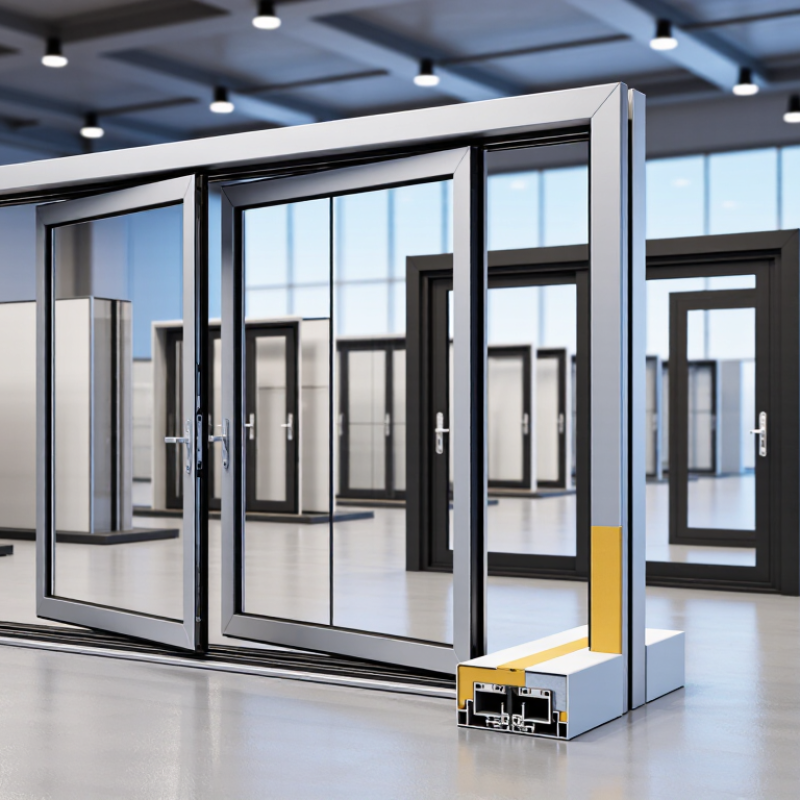
Sliding door manufacturers produce more than framed glass panels. They design door leaves, aluminum or steel frames, rollers, tracks, handles, seals, locks, and automation systems. Some factories focus on residential doors, while others supply heavy systems for hotels, offices, hospitals, and retail entrances. Their work often includes cutting, welding, glass processing, powder coating, assembly, and packaging. A reliable manufacturer should explain each stage clearly.
The industry is organized around materials, applications, and supply roles. Some companies make complete systems. Others supply profiles, hardware, or treated glass to final assemblers. Export-oriented manufacturers may offer OEM or project-based production, but their capabilities can vary widely. Buyers should review drawings, load ratings, water resistance, cycle tests, and installation instructions. A polished catalog is not proof of consistent quality. This is where many purchasing decisions go wrong.
Tips: Request a working sample, not only product photos. Check roller movement, frame alignment, seal compression, and track noise. Ask for recent test records and packaging details. Confirm whether replacement hardware remains available after delivery. Compare tolerances, lead times, and inspection procedures, not just unit prices. A small flaw in a two-meter panel can become an expensive site problem. Specifications may also need revision after installation conditions are fully understood.
Top Sliding Door Manufacturers for Global Buyers
How to Compare Manufacturers for Global Buyers
The global doors market was valued at about USD 97.6 billion in 2023, according to Grand View Research. Its forecasted growth makes supplier comparison more important. Do not compare manufacturers by catalog photos alone. Compare tested performance, material consistency, factory controls, and export experience.
Ask for reports covering air leakage, water penetration, wind load, and operating cycles. Standards such as EN 14351-1 and AAMA/FGIA guidelines provide useful reference points. The U.S. Department of Energy reports that windows can cause 25–30% of residential heating and cooling energy use. Therefore, inspect the door’s thermal-break design, glass specification, and weather seals. A beautiful frame may still perform poorly in a humid coastal project.
In practical sourcing, I would request three samples from different production batches. Check roller movement, lock alignment, corner joints, and drainage holes. Ask how the manufacturer packs oversized panels for ocean transport. Replacement rollers and seal kits matter too. Price comes later. A low quotation may hide weak hardware or limited after-sales support. My comparison sheets sometimes overvalue factory certificates and undervalue response speed. That is a mistake. Request warranty terms, spare-part availability, lead times, and clear defect photographs. Small details matter. A supplier that answers technical questions precisely is usually easier to manage across borders.
This chart presents a transparent procurement-weighting model for international sliding-door sourcing. Compliance documentation, thermal performance, weather resistance, security hardware, customization, lead time, and after-sales support are commonly reviewed against standards such as EN 14351-1, ASTM E283, ASTM E330, ASTM E331, and ISO 10077-1. Higher percentages indicate greater importance during manufacturer evaluation; they are not company-specific performance claims.
Leading sliding door manufacturers serve distinct needs across North America, Europe, Asia-Pacific, and the Middle East. Their strengths often reflect local building styles, weather, and project scale. In colder regions, buyers may prioritize insulated frames and tight seals. Coastal projects often need finishes that resist moisture and salt exposure. In dense Asian cities, compact panels and smooth, frequent operation can matter more than oversized openings.
A manufacturer’s product range is only part of the picture. Check frame materials, glass options, hardware availability, and stated performance data. Ask how the system handles wind, water, and repeated use, and request test documentation where relevant.
Details count. A track that collects grit can make a premium door feel rough; a poorly matched handle can complicate daily use.
Regional suppliers may offer shorter lead times and easier access to replacement parts, while larger producers may provide broader configurations. Neither is automatically better. Compare installation guidance, warranty terms, and service coverage for the actual project location.
Even polished catalogs can leave gaps, so clarify what is included before placing an order. A sample corner or operating unit can reveal finish quality and movement that photographs may hide.
One overlooked question: who supports the door after installation?
Global buyers should compare sliding door suppliers beyond catalog images. Materials often reveal the real performance difference. Aluminum frames resist moisture and remain relatively light, while reinforced steel offers stronger support for oversized panels. Wood composite frames provide warmth, but they require careful sealing in humid climates. Glass thickness, coating, and edge treatment also affect safety, heat control, and cleaning needs.
Design details influence daily use. Look for smooth rollers, adjustable tracks, drainage channels, and replaceable hardware. A narrow frame may improve views, but it can reduce insulation space. Multi-panel systems create wider openings, yet installation becomes more demanding. In project reviews, I have seen attractive doors fail because the floor was not level. That detail is easy to underestimate. Certifications differ by supplier and destination. Request current test reports for air leakage, water resistance, wind pressure, thermal performance, and hardware durability. Factory quality certificates can support reliability, but they do not replace product testing. Requirements may also change between regions.
Tips: Ask for section drawings, material samples, warranty terms, and recent test documents. Confirm whether certificates cover the exact model, glass type, and dimensions you will purchase. A supplier may provide a certificate, but its scope might be narrower than expected. Inspecting a working sample is wiser than trusting renderings alone.
Choosing a sliding door manufacturer takes more than comparing catalog photos. Ask which materials are used for the frame, track, rollers, seals, and glazing. Request written specifications, not just phrases such as “heavy duty.” A clear answer should include dimensions, finish options, load limits, and available replacement parts. Details matter.
Verify claims with documents you can check. Review test reports and certificates, confirming they apply to the exact product and model you plan to order. Ask whether testing was performed by an independent laboratory and when it took place. If possible, inspect a working sample: slide it repeatedly, listen for rattling, and check whether the panel stays aligned. A glossy sample may not reflect years of daily use, so ask for references from projects with similar door sizes and conditions.
Also examine the manufacturer’s process after the sale. Get written terms for warranty coverage, spare-part availability, production timing, packaging, and damage reporting. Clarify who handles technical questions during installation, especially when openings are uneven or site measurements change. Compare quotations line by line; a lower price may exclude hardware or protective packing. No checklist removes every risk, and I would treat confident promises without supporting records as a reason to pause. Before placing a large order, request one unit and inspect its finish, movement, and packaging on arrival.