How to Choose Reliable Auto Glass Installers?
Choosing among auto glass installers can feel simple until you notice the crack crossing your windshield, the rain beginning to fall, and several estimates with different prices. The lowest quote may look appealing. Still, glass quality, adhesive choice, technician training, and careful installation all affect the result. A reliable shop should explain its process without rushing you or hiding behind vague promises.
Auto-glass trainer Bob Beranek is a recognized industry educator. A practical paraphrase of his safety-focused guidance is: “The glass matters, but the installation matters just as much.” This is a paraphrase, not a verbatim quotation. It captures an important point: a new windshield must fit correctly and bond properly. Ask whether technicians follow vehicle-specific procedures, use suitable materials, and allow the recommended curing time. Those answers matter more than a polished lobby.
Look for clear written estimates, warranty terms, and direct answers about sensor recalibration when your vehicle needs it. Check whether the installer examines the frame and explains any damage before work begins. A careful technician may point out a small obstruction, worn trim, or an uneven edge. Details count. I would not treat online ratings as proof on their own; reviews can miss workmanship problems that appear later. Use them as one clue, then compare the shop’s explanations, credentials, and service records. This guide explores practical ways to assess auto glass installers, spot warning signs, and choose a provider with confidence—without pretending that every shop or repair is identical.
Understanding Auto Glass Installer Qualifications
A qualified auto glass installer should understand more than how to remove a cracked windshield. Ask about training, hands-on experience, and familiarity with the ANSI/AGSC/AGRSS 005 standard for vehicle glass replacement. A technician should explain how they protect the dashboard, prepare the bonding surface, and follow the adhesive maker’s safe-drive-away time. The details matter. A bead of adhesive that looks smooth is not proof of a safe bond.
Modern vehicles may also need camera or sensor calibration after glass replacement. AAA’s 2018 automotive engineering research reported that an ADAS-equipped windshield replacement could cost up to $1,500, compared with about $250 for a conventional replacement; calibration could add $300 to $600. Costs vary by vehicle, but the figures show why calibration competence matters. Ask whether the installer can perform the required procedure, document the results, and explain what happens if calibration fails. A certificate is reassuring, but it is not the whole story. Clear answers, careful work around trim and sensors, and willingness to discuss limits are useful signs of professional judgment. A rushed appointment may still look tidy. That deserves a second thought.
How to Choose Reliable Auto Glass Installers?
Check for verifiable evidence in each of these five areas. This is a practical checklist, not a legal standard or installer rating; requirements vary by location and vehicle.
Verifying Licensing, Insurance, and Industry Credentials
A reliable auto glass installer should be willing to show current credentials before work begins. Licensing rules vary by location, so check the relevant state or local licensing office rather than relying on a claim made over the phone. Ask for the business name and license number, then confirm that the information matches the company handling your vehicle. Small details matter.
Request proof of liability insurance and ask whether it covers damage that could occur during removal or installation. A certificate should be current and issued for the business doing the work, not a different subcontractor. Ask who will install the glass and whether that technician holds relevant industry credentials. Verify certifications with the issuing organization, including their scope and expiration date. A card in a wallet is not enough.
Credentials do not guarantee careful work, but they offer useful evidence of training and accountability. Ask how the installer documents the job, handles workmanship concerns, and checks camera or driver-assistance systems when calibration is required. Listen for a clear answer, not a rushed promise. I would still compare the paperwork with the actual work order; names and dates can be easy to overlook, even when everyone means well.
Assessing Glass Quality and Installation Procedures
A reliable auto glass installation starts with glass that matches the vehicle’s specifications. Check that the replacement has appropriate safety markings and the correct shape, thickness, and features. A windshield with a camera mount, rain sensor, or heating element needs matching provisions. Small differences matter. Ask how the installer checks for optical distortion. Look through the glass at a straight doorframe or sign; waviness can become distracting while driving. The glass should sit evenly against the frame, without chips, scratches, or uneven edges. A polished surface alone proves little.
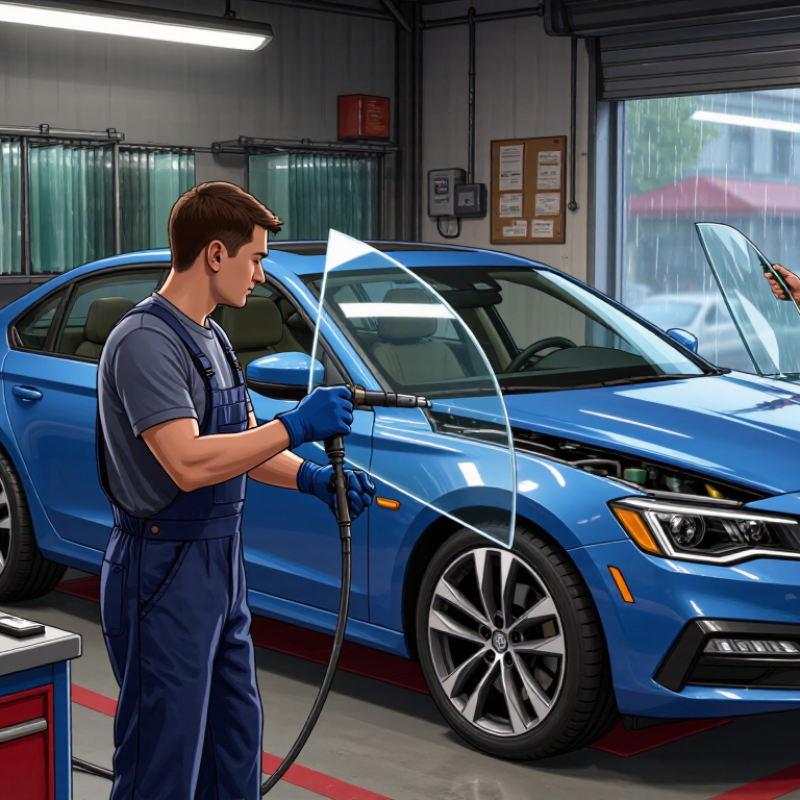
The installation process deserves equal attention. The technician should protect the dashboard and paint, remove old adhesive carefully, and prepare clean bonding surfaces. Ask what adhesive is used and how long the vehicle must remain parked before it is safe to drive. No rushed handoff. If driver-assistance cameras were disturbed, ask whether calibration is needed and how it will be verified. Request written details about the glass, installation, and any workmanship coverage. A neat bead of adhesive is reassuring, but it is not the whole story. I might still overlook a subtle issue, so inspect the fit in daylight and mention any wind noise or water seepage promptly. Small checks help.
Comparing Warranties, Reviews, and Service Estimates
A reliable installer should explain the warranty before ordering glass. Check how long workmanship coverage lasts and whether it includes leaks, wind noise, loose trim, and calibration. Ask what happens if a warning light appears after the repair. Details matter. A short warranty is not automatically poor, but vague exclusions deserve questions. Get the terms in writing, including any limits on labor or follow-up adjustments.
Read recent reviews for specific details, not just star ratings. Look for comments about appointment timing, clean installation, and how staff handled problems. One complaint may be an exception; repeated reports of water leaks are harder to ignore. I would still treat reviews cautiously: dissatisfied customers may post more often, and polished praise can say little.
Compare written estimates line by line. They should identify the glass type, molding, labor, mobile-service fees, and any camera or sensor recalibration. IIHS reported that forward-collision warning alone was associated with 27% fewer rear-end crashes, while systems with automatic braking were associated with 50% fewer, in its 2016 analysis. These figures describe crash reductions, not installer performance. Still, they show why calibration should not be treated as an optional extra. Ask whether the estimate includes it and how completion is documented. A low quote can be tempting. I’d pause if it omits these details.
Confirming Safety Standards and Post-Installation Support
Reliable auto glass work is more than a neat bead of adhesive. Ask whether the installer follows the current ANSI/AGSC/AGRSS installation standard and uses vehicle-specific procedures. NHTSA estimates frontal airbags saved 50,457 lives between 1987 and 2017. That figure is not about glass, but NHTSA notes the windshield helps the passenger-side airbag deploy properly. The bond matters. Ask what adhesive is used, how long it needs to cure, and when the vehicle is safe to drive. Get the answer in writing.
Post-installation support reveals how carefully a shop stands behind its work. Request a written warranty covering leaks, wind noise, and workmanship, plus a clear process for reporting problems. If the vehicle has a forward-facing camera, ask whether calibration is required and how the shop verifies it afterward. Keep the invoice and calibration records. Some details get missed. I still ask twice. Before leaving, check for loose trim, glass chips, or warning lights, then confirm whom to contact if rain exposes a leak. A reliable installer should make follow-up straightforward, not leave you guessing.